
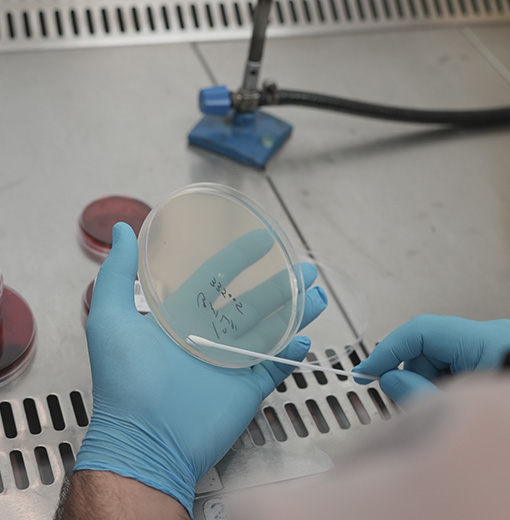
About this department
The Microbiology Department investigates clinical specimens for possible microbial causes of infection. Sample type, collection, transport and clinical information are important to the interpretation of results.
Tests and specimen types
- Urine culture and complete urinalysis.
- Stool culture and relevant stool investigations.
- Throat and respiratory specimens, including sputum.
- Genital and urinary tract specimens.
- Wound, skin and abscess cultures.
- Eye, ear, nasal and breast secretions.
- Blood cultures and microbiology of body fluids.
- Direct smears, staining, AFB investigations and susceptibility testing where appropriate.
Urinalysis and urine culture
| Test or area | Details |
|---|---|
| Urinalysis (U/A) | Examines physical, chemical and microscopic urine findings, such as WBCs, RBCs, nitrite and protein. It does not include an antibiogram. |
| Urine culture | Investigates microbial growth, identifies relevant isolates and may include antibiotic susceptibility testing when appropriate. |
Antibiotic susceptibility testing
An antibiogram assesses susceptibility of a clinically relevant organism to selected antibiotics. It is not automatically performed after every positive culture; the organism, specimen, clinical significance and laboratory criteria determine whether it is appropriate.
Collecting a urine culture sample
Use a sterile container and follow the laboratory’s collection instructions. Correct collection and timely delivery reduce contamination and improve reliability. Many patients can collect at home if storage and transport instructions are followed. Check whether a first-morning sample is required for your test.
Other specimens and preparation
Follow the specific instructions for stool, sputum, secretions and body fluids. Tell the physician and laboratory about antibiotics or other medicines; do not stop treatment yourself. For specialist specimens, confirm acceptance and delivery arrangements before collection.
Results and quality
Culture reporting time depends on the organism, growth and any additional identification or susceptibility work. Quality controls and appropriate specimen handling are part of the laboratory process. Interpret results with your physician.
Common questions
Are urinalysis and urine culture the same test?
No. Urinalysis examines urine characteristics and cells, while culture investigates microbial growth.
Does a positive urine culture always mean an infection?
No. Growth may reflect infection, asymptomatic bacteriuria or contamination. Symptoms and clinical circumstances matter.
Do I need to fast for urine culture?
Fasting is not usually required for urine culture alone. Follow the instructions for your complete set of requested tests.
Can I collect my sample at home?
In many cases, yes, using a sterile container and the correct technique. Follow the laboratory’s delivery and storage instructions.