
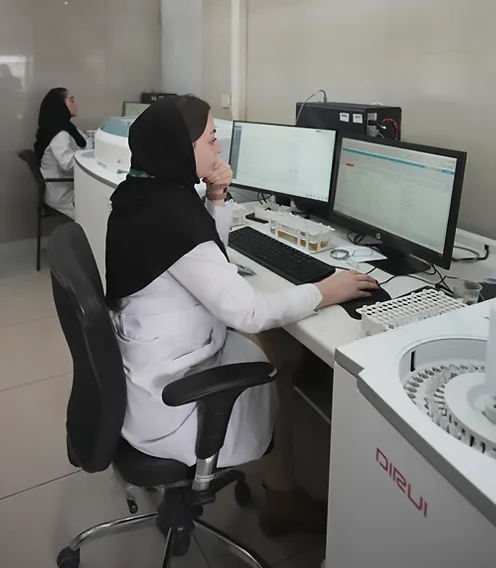
About this department
The Clinical Biochemistry Department at Peyvand Laboratory in Shiraz performs general and specialist tests using fully automated systems. Tests support assessment of kidney and liver function, glucose control, lipids, electrolytes, iron status, proteins, enzymes and inflammation.
Tests and investigations
| Test or area | Details |
|---|---|
| Kidney function | BUN, creatinine, uric acid, cystatin C and eGFR |
| Liver function | AST, ALT, ALP, GGT and bilirubin |
| Blood glucose | FBS, 2hpp, GTT and GCT |
| Lipid profile | Cholesterol, triglycerides, HDL, LDL, Lp(a), ApoA and ApoB |
| Electrolytes and minerals | Sodium, potassium, calcium, phosphorus, magnesium and zinc |
| Cardiac and tissue injury markers | CPK, CK-MB, LDH and hsCRP |
| Proteins and enzymes | Albumin, total protein, amylase and lipase |
| Iron studies | Iron (Fe), TIBC, ferritin, transferrin and haptoglobin |
| Inflammation and immunology | CRP, RF, C3, C4, IgA, IgG and IgM |
Specialist and therapeutic drug tests
- Sodium valproate, digoxin, phenobarbital, phenytoin and carbamazepine.
- Cholinesterase, alpha-1 antitrypsin, acid phosphatase, ASO, ammonia, lactate and ceruloplasmin.
- Transferrin, citrate, oxalate, free kappa and free lambda light chains, and D-dimer.
Urine biochemistry
Urine tests include protein, microalbumin, creatinine, sodium, potassium, chloride, magnesium, urea nitrogen, calcium, phosphorus and glucose. Sample collection requirements depend on the test ordered.
Our equipment
Cobas C311, Hitachi 7180 (917), Advia 1800, Dirui 1200 and Jokoh systems are used in this department.
Biochemistry and hormone testing
Biochemistry focuses on metabolic markers, proteins, enzymes and organ function. Hormone testing examines endocrine function and related specialist markers. Your doctor determines which investigations are appropriate.
Before your visit
Preparation depends on the exact tests requested. Check the test preparation guidance before your visit and tell the laboratory about medicines and supplements you take. Do not stop or change prescribed medicines without your doctor’s instructions.